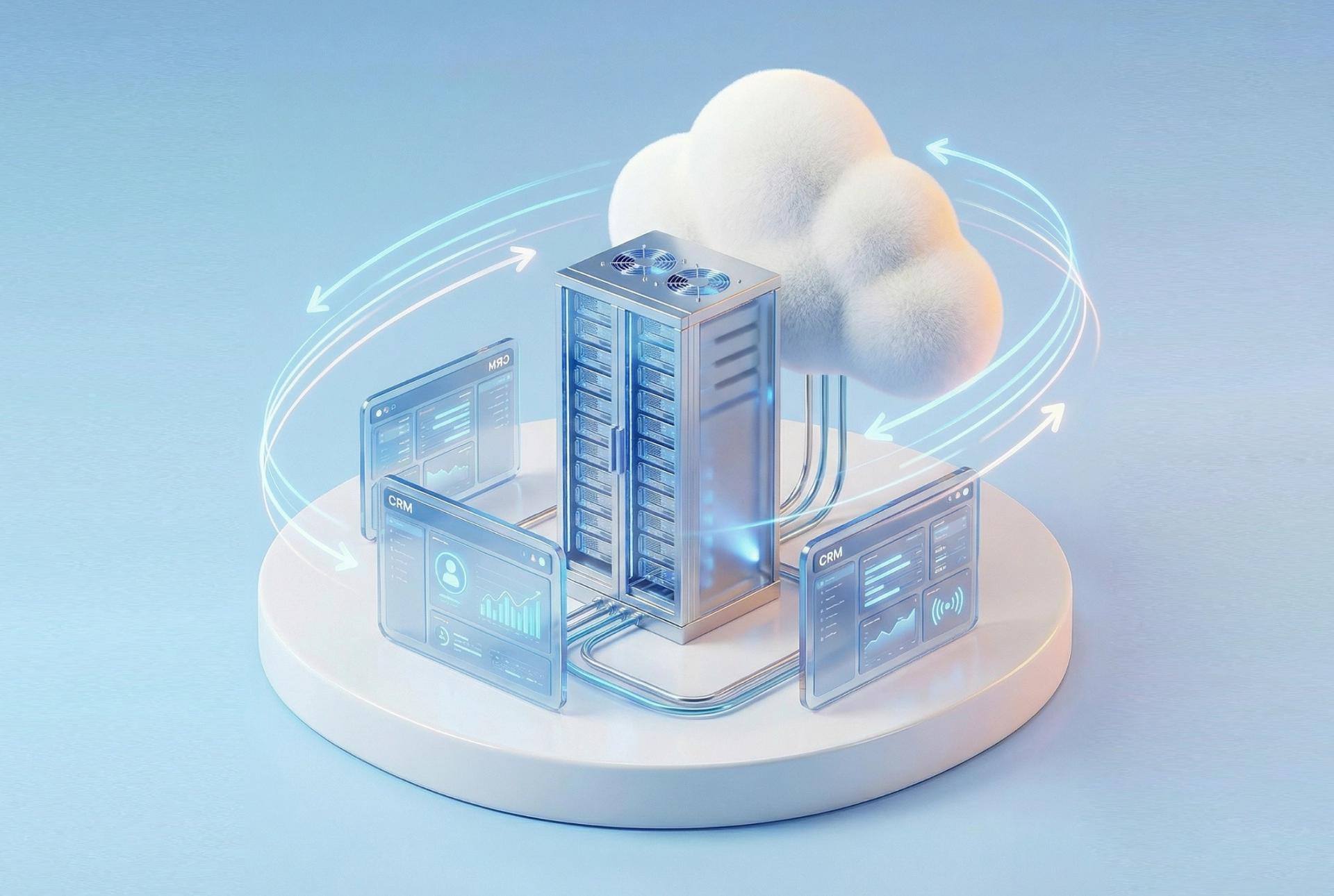
Digital transformation is often discussed in terms of tools and technologies, but in practice, it is a shift in how a business operates. Moving to the cloud is not simply about relocating infrastructure — it is about rethinking how systems, teams, and processes work together.
This is what defines a cloud journey: a structured, intentional transition from traditional IT environments to a more flexible and scalable operating model.
Understanding the Cloud Journey
At its core, a cloud journey is a gradual and carefully planned transformation. It includes the migration of data, applications, and workloads, but its real value lies beyond the technical layer.
Organizations use this transition as an opportunity to reassess how information flows, how decisions are made, and how quickly they can respond to change.
Consider a manufacturing company that has relied on on-premises systems for decades. The move to the cloud does not begin with servers — it begins with questions:
— How quickly can new products be launched
— How effectively can distributed teams collaborate
— Where are the current bottlenecks
These business priorities shape the direction of the journey far more than any specific technology choice.
Key Dimensions of Transformation
Technology Foundation
A successful cloud journey requires a clear understanding of the existing infrastructure and a well-defined target architecture. This involves evaluating system dependencies, compatibility, and integration requirements.
However, simply replicating existing systems in the cloud rarely delivers meaningful results. The real opportunity lies in redesigning architecture to take advantage of cloud-native capabilities such as scalability, resilience, and automation.
Organizational Change
Cloud adoption affects the entire organization, not just the IT department. Teams need to work with new tools, and leadership must adapt to a more dynamic model of resource management.
Without structured onboarding, training, and internal alignment, even well-designed technical solutions may fail to deliver expected outcomes.
Security and Compliance
Moving to the cloud introduces a different security model rather than eliminating risks. Data protection, access control, and regulatory compliance must be reconsidered in the context of distributed environments.
Organizations need to establish governance frameworks that reflect the shared responsibility model of cloud providers and the specific requirements of their industry.
Stages of the Cloud Journey
Assessment and Planning
The cloud journey begins with a comprehensive assessment of the current IT landscape, including servers, storage, networking, and software.
At the same time, organizations evaluate internal readiness:
— skills and expertise
— operational processes
— overall maturity
This stage results in a prioritized roadmap that reflects both technical dependencies and business value. Decisions are made regarding deployment models such as public, private, or hybrid cloud.
Key performance indicators and financial considerations, including total cost of ownership and risk assessment, are defined early in the process.
Architecture Design
During the design phase, the target cloud architecture is developed with scalability, resilience, and security in mind.
Organizations define:
— platform and tooling selection
— monitoring and observability approach
— migration strategies per application
This stage also includes rollback strategies, disaster recovery procedures, and communication planning. Pilot migrations are often conducted to validate assumptions and reduce risk before scaling.
Migration Execution
Migration is typically carried out in phases. Less critical environments, such as development and testing, are moved first to refine processes and identify issues.
Applications are migrated based on complexity:
— stateless systems first
— followed by more complex stateful workloads
Throughout this stage, performance, availability, and integration points are continuously monitored, and configurations are documented.
Optimization and Growth
Once migration is complete, the focus shifts to optimization and long-term use of cloud capabilities.
Organizations implement:
— automation and scaling policies
— DevOps practices and CI/CD pipelines
— advanced monitoring and alerting
Security audits and compliance checks become part of continuous operations. Over time, organizations move from basic cloud usage to building new capabilities on top of cloud infrastructure.
Beyond Migration: Measuring Success
A cloud journey does not automatically create value. The real impact is measured through business outcomes.
Key indicators include:
— faster time-to-market
— improved operational efficiency
— ability to scale without friction
Ultimately, the success of a cloud journey depends on how effectively an organization uses cloud capabilities to solve real business problems — not on how quickly systems are migrated.